Showing posts with label diabetes. Show all posts

Saturday, March 16, 2013

How Can I Prevent or Reverse Type II Diabetes?

There’s been a lot of talk lately about diabetes remission. Edward Gregg from the Centers For Disease Control (CDC) summarizes the common thinking of today very well… 

Kind of a long-term assumption really is that once you have diabetes there's no turning back on it, and there's no remission or cure -- Edward Gregg 

However, in a recent study that Edward Gregg and his team at the CDC published in the Journal of The American Medical Association (JAMA), 11.5% of those with Type II Diabetes who participated in a one year program of intensive diet and exercise were found to have blood sugar levels that approached those levels of their “pre-diabetic” state. 

Additionally, those who were more newly diagnosed had a greater chance of falling into the 11.5% group of people who went into remission. The hallmark of the research findings was that weekly accountability and support played just as important a role as diet and exercise. 

This gives hope to those with Type II Diabetes that aggressive lifestyle change & proper accountability can have significant impact on overall health outcomes with Type II Diabetes. It’s no longer a mandatory sentence that has to be accepted. It can be fought, and the battle can be won. 

At Matrix Wellness Solutions, we have had a number of clients who have reduced or stopped their diabetes medications under the close medical supervision that we offer through our weight loss programs. Below is a graph of one such patient.
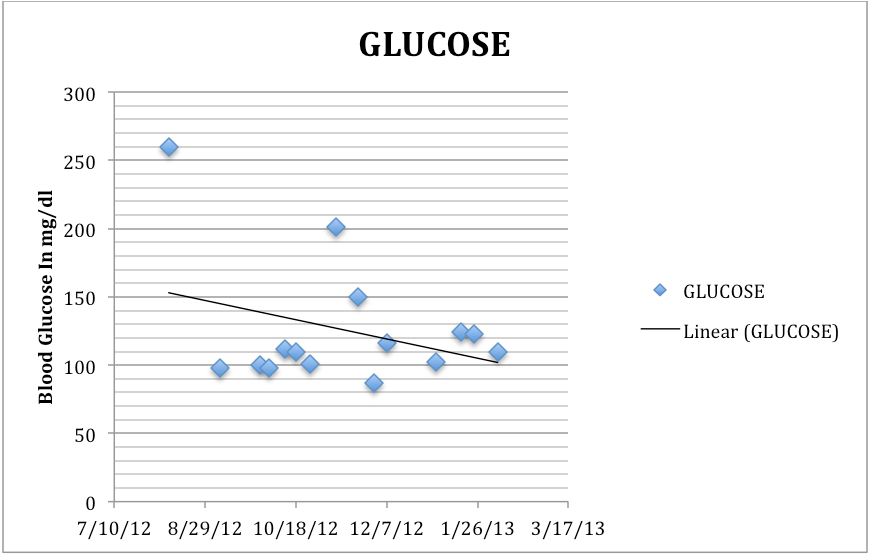
Glucose Results

Upon admission to the clinic, this person had a fasting blood sugar of 260; he was also 320 pounds and taking 60 units of insulin along with two different oral diabetes medications. Over a 6 month period, his blood sugar continued to decline and he lost 70.4 pounds. The end result was that he came off of insulin & one of his oral diabetes medications completely. The other oral medication has been cut in half and we are hopeful that he will be off of this one in the next 3 months. 

During this six-month period, this particular patient was seen on a weekly basis. He was also given dietary education, support & accountability for a customized diet plan with moderate exercise. His lab work and blood sugars were monitored frequently throughout this period and adjustments were made to his medications as needed. 

At Matrix Wellness Solutions we have real people with real results.

Sunday, February 24, 2013

Living at “GROUND ZERO” for heart disease, diabetes, and stroke

Well, the South is notorious for a lot of things, but most notably in the medical community, we are known as “Ground Zero” for “The Big Three” killers in America: Heart Disease, Diabetes, and Stroke. Due to the fact that this is American Heart Awareness Month, and we live at Ground Zero, I’d like to talk candidly about a few things. 


Risk Factors for Heart Attack and Stroke: 

Inactivity and obesity increase your chances of heart attack or stroke by 73.4% over the course of your life. Other risk factors include high blood pressure (31% risk), cigarette smoking (21% risk), high cholesterol (16% risk), and diabetes (10%). What most people don't’ realize is that 49% of all Americans carry at least one of these risk factor. 

There are other risk factors such as ethnicity and genetics that come into play. The fact of the matter is that factors like ethnicity and genetics only magnify the other risk factors listed above. This is why it’s important for us to test your genetics. Matrix Wellness Solutions is one of 5% of clinics nationwide that even offer this type of testing. The good news is this: if you have private insurance, in most cases, it won’t cost you anything other than your co-pay. 

Here’s A Quick Guide To Decreasing Your Risk 

You can lower your risk of heart disease and heart attack by taking simple steps every day. 


  • Eat a healthy diet. 
  • Maintain a healthy weight. 
  • Be active. Exercise regularly. 
  • Be smoke-free. 
  • Limit alcohol use. 
  • Manage any medical condition you might have. Learn the ABCS of health. Keep them in mind every day and especially when you talk to your health provider: 

Appropriate aspirin therapy for those who need it 

Blood pressure control 

Cholesterol management 

Smoking cessation 

  • Add vital nutritional supplements to your diet such as Fish Oil, Ubiquinol, Nitric Oxide, Lecithin, Niacin, Vitamin E, Vitamin D, & Alpha Lipoic Acid. 

As we wind down American Heart Health Month, let’s not make it a once per year reminder. Do something daily to remind yourself of the importance of taking care of your heart. Pick one thing from the list above to do everyday and soon, you’ll be developing healthy habits that stay with your for a lifetime.


If you liked this article, remember to share with your friends on Facebook!
Just click the icon below. Thank you for visiting!

Thursday, January 24, 2013

What Every Parent Should Know About Childhood Obesity

This may seem like a very bold statement, but it was recently reported by leading experts that today’s generation of parents might be the first generation to outlive their own children. Why is this?

It’s estimated that 155 million children age 5 to 17 are overweight or obese. In the medical community, we are beginning to see a sharp rise in children with Type 2 Diabetes. This is the kind of diabetes that it is directly related to obesity. Most parents don’t realize that if their child develops diabetes prior to the age of 14 years they are shortening their life by 17 to 27 years. 

What can you do about this? The first thing you can do is take ownership of the problem. Talk candidly with your pediatrician or family practitioner about your child’s individual risks. Ask to see your child’s weight plotted on a growth chart. If your child’s weight is over 75%, it’s probably time to be concerned.

Next, change your child’s activity level. The average child spends 25-35 hours per week watching T.V., playing video games, or sitting at a computer. Turn off the electronics during daylight hours and get your child moving. Enroll them in a swimming class, gymnastics, dance, or martial arts.

Lastly, set the example of healthy eating & exercise for your child. Children naturally mimic what they see. If they see you living a sedentary lifestyle, they will likely do the same. Go for a walk with your child, ride bicycles, toss a ball, or play Frisbee. Make it fun. Also, set the example in the way you eat. If you buy chips, cookies, and sugary snack food for the house, you are sending the message that these things are safe to eat. Provide healthier options that do not include processed sugar, corn, or potatoes. 

If you would like tips on eating healthy and fun ways to make good eating habits, give us a call at 731-343-2223. We will be glad to help you reach your goals.

Brian Brown, MSN, APRN-BC